
Fungal nail
Onychomycosis is a fungal infection of the nail that results in thickening, discoloration, and structural changes to the nail plate. While initially cosmetic, progression of the condition may lead to pressure-related discomfort as the nail thickens and rubs against footwear. The infection occurs between the nail plate and the underlying nail bed.
The condition most frequently affects the big toe but can involve other toenails. Fungal nail infections are caused by dermatophytes, the same organisms responsible for athlete’s foot, which thrive in warm, moist, enclosed environments. Trauma to the nail, overly short nail trimming, or restrictive footwear may enable fungal organisms to penetrate beneath the nail.
During your initial assessment, a rapid 5-minute fungal nail test can be performed to confirm the presence of a fungal infection. This diagnostic test provides reliable, immediate results, allowing for evidence-based treatment planning. By identifying the exact cause of nail changes, we can avoid unnecessary or ineffective treatments and implement a targeted management or treatment plan tailored to your specific condition.
As needed, we will trim and clean the affected nail(s).
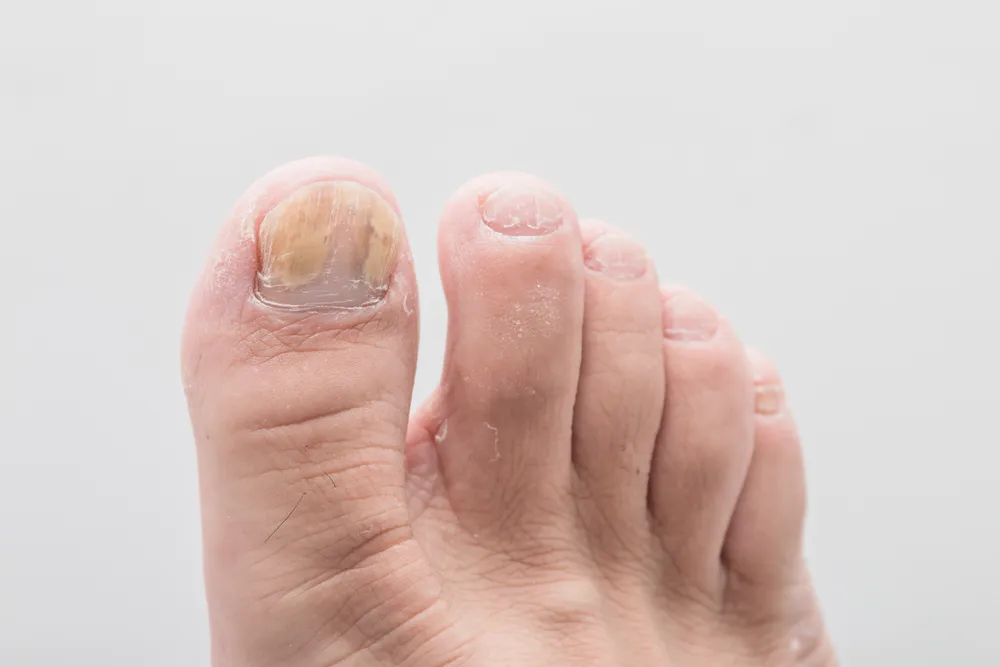
Signs and Symptoms
Fungal nail infections typically begin at the tip or side of the nail and gradually spread towards the nail base. Early signs include changes in colour, such as off-white, yellow, or occasionally green. Over time, the nail may become thickened, brittle, and crumbly, and in severe cases may break down completely.
Toenail infections are more challenging to treat than skin infections due to slow nail growth and limited blood supply. As a result, it can take up to a year for a healthy, clear nail to fully regrow. Onychomycosis is a persistent condition, and individuals affected are advised to seek care from a registered Podiatrist.
Treatment may include thinning the nail to reduce thickness and applying topical antifungal medication. In some cases, oral antifungal treatment may be prescribed; however, this can involve potential contraindications and may require blood tests before and during treatment.
Recurrence is common, particularly if the original infection was not fully resolved or if athlete’s foot is present.